
What to Feed Garden Birds in Every Season: A Practical Year-Round Guide

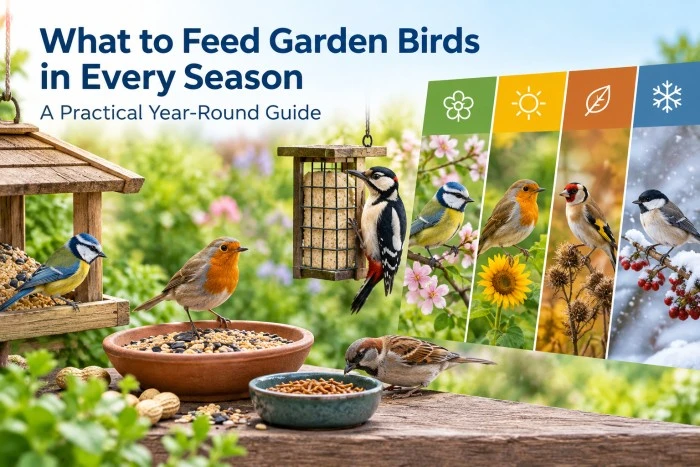
Providing the right food at the right time helps garden birds stay healthy through changing weather, breeding cycles, and natural food shortages. A thoughtful feeding routine supports local populations without replacing their natural foraging. This guide outlines suitable foods for each season so you can offer useful nutrition while avoiding common mistakes.
Spring: Protein for Breeding and Nesting
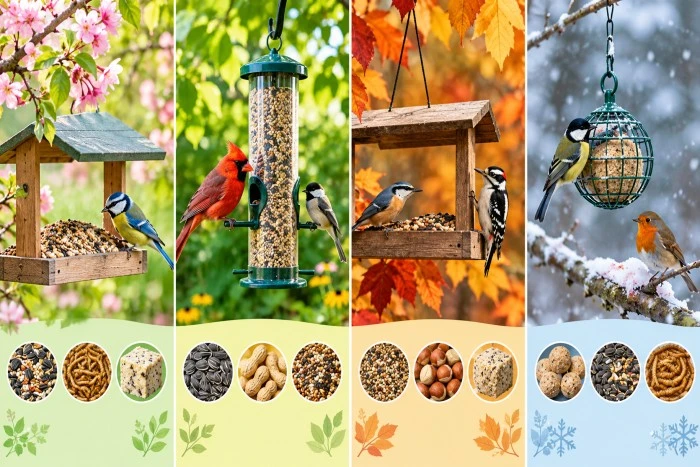
Spring is a demanding period. Birds need extra protein to produce eggs and raise chicks. Live or dried mealworms are among the most valuable offerings because they closely resemble the insects parents naturally collect. Softbill foods, suet pellets, and high-protein seed mixes also work well. Sunflower hearts (hulled seeds) provide energy without the hard shells that young birds struggle to crack.
Avoid large quantities of dry bread or whole peanuts during this season; both can pose choking risks to fledglings. Fresh water is essential for drinking and bathing as birds prepare nests. Place feeders in quiet spots away from dense cover where cats may hide, and clean them regularly to limit the spread of disease among growing families.
Summer: Light Support During Natural Abundance
In summer, natural insect and seed supplies are usually plentiful, so supplementary feeding can be lighter. Soft fruits such as apples, pears, and berries cut into small pieces attract blackbirds, thrushes, and starlings. Mild grated cheese or soaked raisins offer variety. Nyjer seeds remain popular with goldfinches, while sunflower hearts continue to suit a wide range of species.
Water becomes especially important during hot, dry spells. Shallow dishes or bird baths refreshed daily help birds cool down and maintain feather condition. Reduce or pause feeding of high-fat foods if natural sources appear abundant, and never offer salty, sugary, or processed human leftovers. Keep feeding stations clean, as warm weather accelerates the growth of mould and bacteria.
Autumn: Building Reserves for Migration and Winter
As days shorten, many birds prepare for migration or the leaner months ahead. Energy-dense foods become more useful. Sunflower seeds, mixed seed blends, and unsalted peanuts in mesh feeders supply valuable calories and fats. Suet blocks or fat balls help birds lay down reserves. Berries left on garden shrubs or offered in feeders support thrushes and blackbirds.
This is also a good time to clean and repair feeders and bird baths before winter weather arrives. Position feeders within reach of cover so birds can escape quickly from predators, yet far enough from dense vegetation that cats cannot ambush them. Consistent food sources help both resident birds and those passing through on migration.
Winter: High-Energy Foods for Cold Weather Survival
Winter places the greatest demand on birds’ energy reserves. High-calorie foods are most beneficial when natural insects and seeds are scarce. Suet, fat balls, and peanut cakes provide concentrated energy. Black sunflower seeds and sunflower hearts remain excellent all-round choices. Nyjer seed continues to attract finches, while mixed seed blends support a broader range of species.
Live or dried mealworms can still be offered on milder days. Fresh water is critical when temperatures drop below freezing; replace ice with lukewarm water or use a shallow heated bird bath if available. Feed earlier in the day so birds can fill up before the coldest night-time hours. Avoid desiccated coconut, cooked porridge oats that can harden, and any salted or flavoured nuts.
General Best Practices Year-Round
Hygiene matters in every season. Clean feeders and bird baths at least once a week with a mild disinfectant, rinse thoroughly, and allow them to dry. Rotate feeder locations occasionally to prevent waste build-up on the ground. Offer a variety of foods so different species can find what they need, and store seed and suet in cool, dry conditions to prevent mould.
Many households find it convenient to keep a steady supply of quality bird food on hand. Retailers such as ocado often stock seed mixes, suet products, and mealworms alongside regular groceries, making it easier to maintain a consistent feeding routine.
What to Avoid
Never offer milk, cooked leftovers with salt or seasoning, avocado, chocolate, or dry white bread in large amounts. These items can cause digestive problems or lack proper nutrition. Whole peanuts should be served in proper mesh feeders so birds cannot swallow them whole. Monitor for signs of illness among visiting birds and temporarily stop feeding if many individuals appear unwell, then clean all stations thoroughly before restarting.
Feeding garden birds is most effective when it complements natural food sources rather than replacing them. By adjusting the type and quantity of food to the season—protein-rich options in spring, lighter fare in summer, energy foods in autumn, and high-calorie provisions in winter—you provide meaningful support throughout the year. Consistent, clean, and carefully chosen offerings help birds thrive while giving you the pleasure of observing a wider variety of species in your garden.