
Vision in Motion: Choosing the Right Lens Tints and Coatings for Outdoor Sports

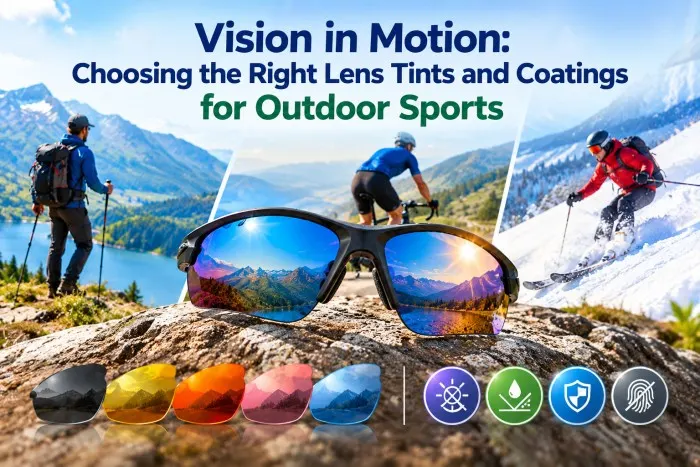
Clear, comfortable vision is essential when movement, changing light, and environmental challenges come together. The right lenses can reduce glare, sharpen contrast, and protect eyes from UV radiation and impact during outdoor sports. Selecting appropriate tints and coatings transforms ordinary eyewear into performance equipment that supports focus and safety across different activities and conditions.
Understanding Lens Tints and Their Effects
Lens tint color influences how the eye perceives brightness, contrast, and color. Gray tints reduce overall light intensity evenly and preserve natural color balance, making them versatile for bright, sunny conditions such as running, cycling, or hiking on open trails. Brown or amber tints enhance contrast and depth perception, which helps in variable light or when reading terrain quickly—useful for mountain biking, trail running, and golf.
Yellow or gold tints excel in low-light or overcast situations by boosting contrast and making objects stand out against muted backgrounds. They are popular among early-morning runners, cyclists in fog, and some winter sports athletes. Rose or vermillion tints improve contrast in flat light and can reduce eye strain during prolonged activity. Mirrored coatings on top of these base tints further cut glare by reflecting a portion of incoming light, especially helpful on water, snow, or reflective pavement.
Essential Coatings for Performance and Protection
Beyond color, coatings determine how lenses handle real-world conditions. Polarized coatings filter horizontal glare from surfaces such as water, snow, and roads, reducing squinting and eye fatigue. They are particularly valuable for cycling, driving between trailheads, fishing, and water-based sports. Anti-reflective coatings minimize internal reflections on the back surface of the lens, improving clarity when light comes from behind or from the side.
Hydrophobic and oleophobic coatings cause water, sweat, and oils to bead and roll off rather than smear. This keeps vision clearer during rain, high-intensity effort, or humid conditions. Scratch-resistant hard coats extend lens life, while UV400 protection blocks essentially all harmful UVA and UVB rays—non-negotiable for any outdoor activity. Impact-resistant materials such as polycarbonate or Trivex add a critical safety layer for sports involving speed, balls, or potential falls.
Matching Lenses to Specific Activities
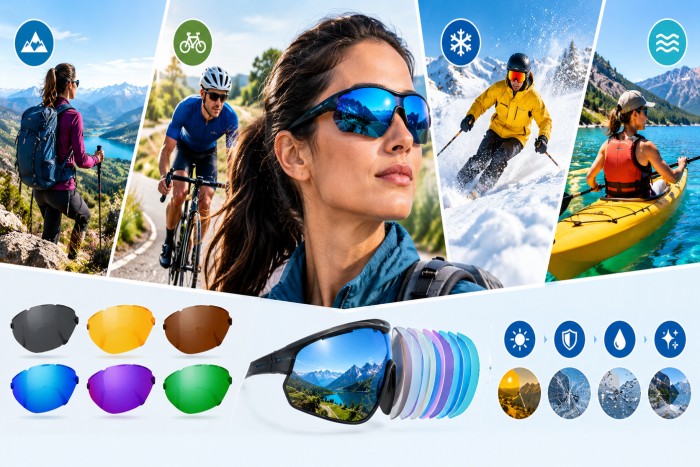
Different sports place distinct demands on vision. Road cyclists often prefer gray or brown polarized lenses with strong anti-reflective properties to handle bright sun and reflective surfaces. Trail runners and mountain bikers benefit from amber or rose tints that heighten contrast on uneven ground, paired with durable, hydrophobic coatings. Skiers and snowboarders typically need high-contrast tints (amber, rose, or specialized photochromic options) plus strong polarization and anti-fog treatments to manage snow glare and rapidly changing light.
Water sports participants gain the most from polarized lenses with hydrophobic coatings that resist spray and salt. Runners and casual hikers can rely on versatile gray or brown tints with solid UV protection and lightweight frames. Photochromic lenses that automatically adjust tint density offer convenience for athletes who move between shade and open sun, though they may not darken fully inside vehicles or respond as quickly as fixed tints in fast-changing conditions.
Practical Selection Tips
Start with your most common lighting conditions and primary sport. Consider whether you need prescription lenses; many performance frames accept custom optics. Fit and coverage matter—wraparound designs reduce peripheral light leak and wind. Test lenses in realistic conditions when possible, or review detailed product specifications for visible light transmission (VLT) percentages. Lower VLT (10–20%) suits very bright environments; higher VLT (30–60%) works better in moderate or variable light.
Affordable customization options from brands such as zennioptical make it easier to combine the right tint, polarization, and protective coatings without compromising on prescription accuracy. Always verify that lenses meet relevant safety standards for impact resistance when the activity involves higher risk.
Maintaining Performance Over Time
Clean lenses with a microfiber cloth and appropriate solution to preserve coatings. Avoid abrasive materials or household cleaners that can degrade hydrophobic and anti-reflective layers. Store eyewear in a protective case when not in use. Replace lenses or complete pairs when scratches, coating wear, or changes in vision prescription reduce effectiveness.
Selecting the correct combination of tint and coatings ensures that vision remains an asset rather than a limitation. By matching lens technology to the demands of light, terrain, and movement, athletes and outdoor enthusiasts maintain sharper focus, greater comfort, and better protection throughout every activity.