
How Online Auto Financing Is Changing Car Buying: Inside Carvana’s Instant Pre-Qualification Model

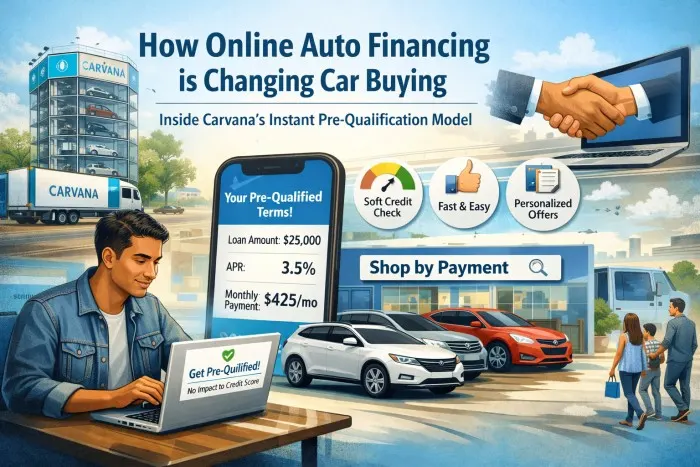
The car-buying experience in the United States has undergone a dramatic transformation over the past decade, driven largely by digital innovation. What once required hours at a dealership—negotiating prices, filling out paperwork, and waiting for loan approvals—can now be completed from a laptop or smartphone. At the center of this shift is Carvana, whose instant pre-qualification financing model is redefining how Americans shop for vehicles and secure loans.
The Shift from Showroom Financing to Digital Approval
Historically, auto financing began only after a buyer chose a car and sat down with a dealership’s finance manager. This meant customers often fell in love with a vehicle before knowing whether they qualified for a loan. Online financing flips that order. Buyers now start with their budget, not the car.
Digital lenders use automated underwriting systems that analyze credit profiles, income estimates, and financial behavior in real time. Instead of waiting hours—or days—for a decision, applicants can receive results almost instantly. This approach aligns with broader U.S. consumer trends, where speed, transparency, and convenience increasingly drive purchasing decisions across industries.
What Instant Pre-Qualification Actually Means
Instant pre-qualification is not the same as a full loan approval. Rather, it is an early assessment that estimates how much a customer can borrow and what terms they might receive. Most platforms perform this check using a soft credit inquiry, which does not affect a consumer’s credit score. This distinction matters because many buyers hesitate to shop for financing out of fear that multiple credit checks could lower their score.
Credit scoring models developed by organizations like FICO differentiate between soft and hard inquiries. Soft checks are considered informational, allowing shoppers to compare financing options safely. This transparency encourages consumers to explore multiple possibilities instead of settling for the first offer presented at a dealership.
Why Budget-Based Shopping Is Becoming the Norm
Digital financing tools often display real monthly payment estimates alongside vehicles, allowing buyers to filter inventory by affordability rather than price tag. For example, someone might search for cars under $450 per month instead of under $25,000. This shift reflects how Americans actually manage finances—monthly budgets typically matter more than total cost.
According to U.S. consumer finance data, most auto buyers rely on loans rather than paying cash. Because financing is so common, understanding payment obligations upfront helps prevent over-borrowing and reduces the likelihood of loan defaults. Platforms that integrate financing into the shopping experience empower consumers to make informed decisions earlier in the process.
Expanding Access to Credit
Another major impact of online auto financing is increased accessibility. Traditional lenders often rely on rigid approval criteria, which can make it difficult for people with limited credit history or past financial setbacks to qualify. Digital platforms, however, may evaluate a broader set of factors, such as income stability and recent payment patterns.
This approach can benefit younger buyers, gig-economy workers, and individuals rebuilding credit. By widening eligibility criteria, online lenders help more Americans participate in the vehicle market—an important factor in a country where reliable transportation is closely tied to employment opportunities and economic mobility.

Transparency Builds Consumer Confidence
One of the biggest complaints about dealership financing has historically been a lack of clarity. Buyers sometimes feel unsure about interest rates, loan terms, or hidden fees until late in the transaction. Online financing platforms address this issue by presenting clear loan terms, down-payment options, and interest ranges before checkout.
Transparency also fosters trust. When shoppers know exactly what they qualify for, they can compare offers confidently and avoid high-pressure sales tactics. This shift mirrors trends seen in other financial sectors, where digital banking and fintech tools emphasize user control and data visibility.
The Broader Industry Impact
The rise of instant pre-qualification is not just changing consumer behavior—it is reshaping the automotive retail landscape. Dealerships increasingly integrate online financing tools into their own websites to remain competitive. Lenders are also investing heavily in artificial intelligence and predictive analytics to refine approval accuracy and reduce risk.
Economic indicators tracked by institutions such as the Federal Reserve show that auto loans consistently represent one of the largest categories of consumer debt in the U.S. Because of this scale, even small improvements in lending efficiency can have nationwide financial implications. Faster approvals and better risk assessment benefit both lenders and borrowers by reducing defaults and improving loan performance.
The Future of Car Buying
Instant pre-qualification is likely only the beginning of a broader transformation. As technology evolves, we can expect financing systems that personalize loan offers in real time, adjust rates dynamically, and integrate with digital wallets or banking apps. Artificial intelligence may soon predict optimal loan structures based on spending habits and long-term financial goals.
For American consumers, the key takeaway is empowerment. Online auto financing tools shift control from lenders and dealerships to buyers. Instead of navigating a confusing process, shoppers can approach car purchases with clear budgets, realistic expectations, and confidence in their financing options.