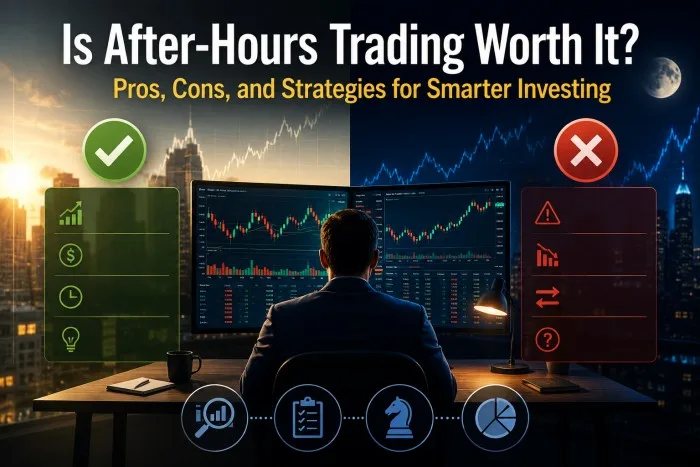
Is After-Hours Trading Worth It? Pros, Cons, and Strategies for Smarter Investing

The stock market doesn’t always stop moving when the closing bell rings. Even after regular trading hours end, investors can continue buying and selling stocks through after-hours trading sessions. This extended access allows traders to react quickly to earnings reports, breaking news, and global events that occur outside the traditional market schedule.
While after-hours trading offers flexibility and potential opportunities, it also comes with unique risks that aren’t present during regular market hours. Lower liquidity, wider bid-ask spreads, and increased price volatility can significantly impact trade execution.
If you’re wondering whether after-hours trading is worth it, this guide explains how it works, its advantages and disadvantages, and strategies that can help you make smarter investment decisions.
What Is After-Hours Trading?
After-hours trading refers to the buying and selling of stocks after the regular stock market closes. Instead of taking place on traditional exchanges, these trades are executed through Electronic Communication Networks (ECNs), which match buyers and sellers electronically.
Most U.S. stock markets operate during regular business hours, while after-hours sessions generally begin immediately after the market closes and continue for several hours.
Many online brokerage platforms provide access to after-hours trading, although available trading hours and eligible securities may vary.
How Does After-Hours Trading Work?
Unlike traditional market hours where thousands of buyers and sellers actively trade, after-hours trading typically involves fewer participants.
Orders are matched electronically through ECNs, meaning trades only occur when compatible buy and sell orders are available. Because there are fewer market participants, prices can fluctuate more dramatically than during normal trading sessions.
Why Investors Trade After Market Hours
Many important financial events happen after the market closes. Common reasons investors participate in after-hours trading include:
- Responding to quarterly earnings reports
- Reacting to major company announcements
- Trading after economic data releases
- Managing positions before international markets open
- Adjusting portfolios following breaking news
This allows investors to respond immediately rather than waiting until the next trading day.
Pros of After-Hours Trading
1. Immediate Reaction to Breaking News
Many companies release earnings reports after the closing bell. Instead of waiting until the next morning, investors can immediately adjust their positions based on new information. This can be particularly valuable when significant news causes large price movements.
2. Greater Flexibility
Not every investor is available during standard market hours. After-hours trading provides additional flexibility for people who work full-time or live in different time zones. Extended trading hours make it easier to manage investments without interrupting daily schedules.
3. Potential Early Opportunities
If major news is released after the market closes, early participants may capitalize on price movements before regular trading resumes. This creates opportunities for investors who closely monitor financial news and company announcements.
4. Faster Portfolio Adjustments
Unexpected events can quickly change market sentiment. After-hours trading allows investors to reduce risk, lock in profits, or rebalance portfolios before the next trading session begins.
5. Access to Market-Moving Events
Corporate announcements such as:
- Earnings reports
- Mergers and acquisitions
- Executive leadership changes
- Product launches
- Regulatory decisions
often occur after the closing bell. Extended-hours trading allows investors to respond without delay.
Cons of After-Hours Trading
1. Lower Liquidity
One of the biggest disadvantages is reduced trading volume. With fewer buyers and sellers available, it may become difficult to execute trades at your desired price. Large orders can be especially challenging during extended sessions.
2. Higher Volatility
Lower participation often leads to sharper price swings. Stocks may move significantly higher or lower on relatively small trading volumes. This increases both profit opportunities and potential losses.
3. Wider Bid-Ask Spreads
The difference between buying and selling prices often becomes much larger after hours. Investors may end up paying more when buying or receiving less when selling. These wider spreads increase trading costs.
4. Limited Order Types
Many brokerage firms restrict certain order types during extended trading sessions. For example, market orders may not be available, and limit orders are often required. Understanding your broker’s rules is essential before placing trades.
5. Greater Price Uncertainty
Prices established during after-hours trading do not always carry over into the next regular trading session. Additional overnight news and increased market participation can significantly change stock prices by the opening bell.

Who Should Consider After-Hours Trading?
After-hours trading isn’t suitable for every investor.
It may be beneficial for:
- Active traders
- Experienced investors
- Earnings-focused traders
- Institutional investors
- Investors managing large portfolios
Long-term investors who rarely make short-term decisions may find little benefit from extended trading sessions.
Smart Strategies for After-Hours Trading
Use Limit Orders
Limit orders allow you to specify the maximum purchase price or minimum selling price you’re willing to accept. This helps prevent unexpected executions caused by sudden price swings.
Focus on High-Volume Stocks
Large-cap companies typically experience higher trading activity after market hours. Greater liquidity usually results in tighter bid-ask spreads and more reliable order execution.
Follow Company Earnings Calendars
Many significant price movements occur immediately after earnings announcements. Tracking reporting schedules helps investors prepare for increased volatility.
Monitor Economic Events
Major economic reports can influence entire market sectors. Keep an eye on announcements such as:
- Inflation reports
- Employment data
- Interest rate decisions
- GDP releases
- Consumer confidence reports
These events often trigger substantial after-hours market activity.
Avoid Emotional Decisions
Price movements after hours can appear dramatic because of lower trading volume. Avoid reacting impulsively to headlines. Take time to evaluate whether new information truly changes a company’s long-term outlook.
Understand Your Brokerage Rules
Each brokerage platform has different policies regarding:
- Trading hours
- Eligible securities
- Order types
- Fees
- Execution methods
Review these details before placing after-hours trades.
Common Risks to Watch
Investors should carefully evaluate several risks before participating in extended-hours trading.
These include:
- Rapid price swings
- Low trading volume
- Limited market participation
- Delayed order execution
- Larger spreads
- Increased uncertainty
Having a clear trading plan can help reduce unnecessary risk.
Is After-Hours Trading Better Than Regular Trading?
The answer depends on your investment style.
Regular Trading Hours
Best for:
- Higher liquidity
- Better price discovery
- Narrow bid-ask spreads
- More stable pricing
After-Hours Trading
Best for:
- Reacting to earnings
- Breaking news
- Portfolio adjustments
- Experienced traders
Neither approach is universally better. Each serves different purposes depending on market conditions and investor goals.
Should Beginners Use After-Hours Trading
Beginners should approach after-hours trading cautiously.Learning how markets function during regular hours first can provide valuable experience before participating in extended sessions.
New investors should also understand:
- Order execution
- Risk management
- Position sizing
- Market volatility
- Limit orders
Developing these skills reduces the likelihood of costly mistakes.
Learning More About After-Hours Trading
Investors looking to deepen their understanding of extended-hours markets can explore educational resources from trusted financial websites such as The Motley Fool, which provides articles explaining after-hours trading, market mechanics, and investing strategies for both beginners and experienced investors.
Frequently Asked Questions
Is after-hours trading legal?
Yes. After-hours trading is legal and offered by many brokerage firms through Electronic Communication Networks (ECNs).
Can stock prices change significantly after market close?
Yes. Earnings reports, breaking news, and economic announcements can cause substantial price movements after regular trading hours.
Are all stocks available for after-hours trading?
Not always. Availability depends on your brokerage platform and whether sufficient buyers and sellers are participating.
Why are bid-ask spreads wider after hours?
Lower trading volume reduces market liquidity, causing larger differences between buying and selling prices.
Is after-hours trading suitable for long-term investors?
Long-term investors generally don’t need to trade after hours unless they want to respond immediately to major news or portfolio-related events.
Final Thoughts
After-hours trading can be a valuable tool for investors who want to respond quickly to market-moving events, earnings releases, and breaking news. It offers greater flexibility and the opportunity to act before the next trading day begins.
However, those benefits come with trade-offs. Reduced liquidity, wider bid-ask spreads, and increased volatility can make extended-hours trading more challenging than trading during regular market hours.
Before participating, investors should understand how after-hours markets operate, use appropriate risk management techniques, and avoid making decisions based solely on short-term price fluctuations. For those with a well-defined strategy and a clear understanding of the risks, after-hours trading can become a useful part of a broader investment approach rather than a substitute for disciplined, long-term investing.