How to Choose Sports Glasses That Stay Secure During Fast Court Movements

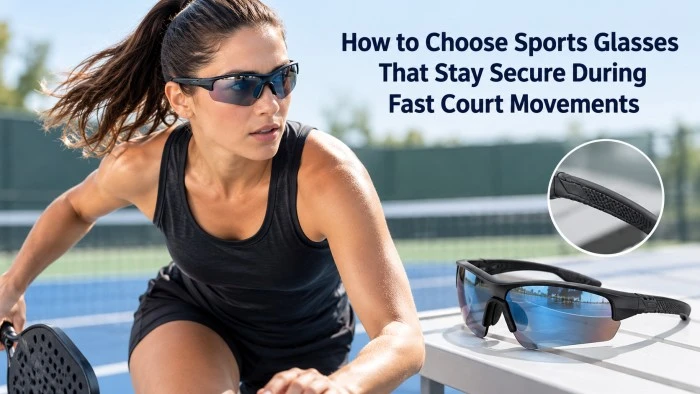
Fast-paced court sports such as tennis, basketball, pickleball, squash, and badminton demand eyewear that stays firmly in place. Ordinary frames often slip, bounce, or shift during sudden stops, lunges, and directional changes. Purpose-built sports glasses address these problems through better fit, grip, materials, and design. Choosing the right pair starts with understanding the features that keep lenses stable when movement becomes intense.
Prioritize a Secure, Sport-Specific Fit
The foundation of stability is fit. Sports glasses should sit close to the face without pressure points, with temples that hold firmly behind the ears and a bridge that matches the shape of your nose. Many performance frames use wraparound styling that follows the contour of the head, reducing gaps where the glasses can shift.
Try frames while mimicking court movements—turning the head quickly, bending forward, and simulating a lateral shuffle. If the glasses move during these simple tests, they will not stay secure in real play. Adjustable nose pads and flexible temple tips help fine-tune contact points so the frame remains stable without feeling tight.
Look for Grippy, Sweat-Resistant Materials
Sweat is one of the main reasons eyewear slips. Soft, rubberized nose pads and temple tips maintain friction even when wet. These hydrophilic or textured materials become slightly tackier with moisture rather than slicker, which is ideal for long matches or hot conditions.
Frames made from lightweight, flexible materials such as certain nylons or grilamid also improve security. They absorb minor impacts and flex instead of sliding. Heavier frames tend to bounce more during rapid movement, so low weight combined with good grip usually performs better on court.
Consider Temple Design and Retention Options
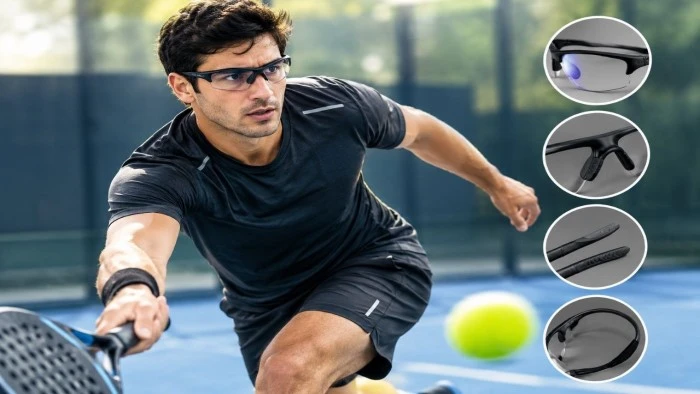
Temple shape influences how well glasses stay put. Straight or slightly curved temples with rubberized ends often secure better than traditional narrow arms. Some sports models include adjustable or cable-style temples that hook more positively behind the ears.
For maximum security, especially in high-intensity sports, look for frames compatible with a retention strap or that include an integrated band. A simple adjustable strap keeps the glasses anchored during dives, jumps, or sudden changes of direction. Many players use a strap only for competition and remove it for casual wear, so versatility is useful.
Evaluate Lens Coverage and Stability
Lenses should offer enough coverage to protect the eyes from balls, elbows, and debris without creating a tunnel effect. Wrap styles generally stay more stable because they distribute contact around the face. Ensure the lenses are securely mounted; poorly fitted lenses can rattle or shift independently of the frame.
Impact-resistant materials such as polycarbonate are standard for sports and help the glasses withstand accidental hits. Anti-fog and hydrophobic coatings further support clear vision when heat and movement increase perspiration.
Match Features to the Specific Sport
Different courts create different demands. Basketball and squash involve more vertical movement and closer physical contact, so a very secure fit and possible strap are valuable. Tennis and pickleball emphasize lateral motion and quick forward lunges; lightweight wrap frames with strong nose-pad grip often work well. Multi-sport athletes may prefer a versatile model that balances coverage, weight, and retention options.
If you wear prescription lenses, confirm that the sports frame can accept your prescription or that prescription inserts are available. Stability matters just as much for corrective sports glasses as for non-prescription ones. Zenni Optical offers affordable sports and performance-oriented frames that allow players to focus on fit and practical features without overspending.
Test for Comfort During Extended Wear
Security should not come at the cost of pain. Frames that dig into the nose or temples will distract you and may be abandoned after a few sessions. The best sports glasses feel almost unnoticeable once properly adjusted. Lightweight construction, smooth contact points, and balanced weight distribution all contribute to comfort during long practices or matches. Ventilation also affects both comfort and fogging. Small vents or lens shapes that promote airflow help maintain clear vision when effort levels rise.
Practical Buying Checklist
Before purchasing, confirm:
- Adjustable or grippy nose pads
- Rubberized or textured temple tips
- Lightweight, flexible frame material
- Option for a retention strap
- Adequate wrap and coverage for your sport
- Impact-resistant lenses with useful coatings
- Compatibility with prescription needs if required
Whenever possible, test the glasses with movement rather than relying only on static mirror checks. Fit is personal; what stays secure on one face may shift on another.
Final Thoughts
Sports glasses that stay secure during fast court movements combine a close, adjustable fit, sweat-resistant grip materials, thoughtful temple design, and appropriate coverage. By prioritizing these elements over pure style, players gain clearer vision, fewer distractions, and better protection. The right pair should feel stable through sprints, stops, and sudden cuts—allowing full focus on the game rather than on pushing glasses back into place.