Balance Transfer or Personal Loan: Which Option Is Better for Managing Your Debt?


Managing debt can feel overwhelming, especially when high-interest credit card balances continue to grow every month. Many people look for ways to reduce interest and make repayment easier. Two common options are a balance transfer and a personal loan. While both can help consolidate or reduce debt, they work differently and suit different financial situations. Understanding how each option works can help you decide which one is the right choice for you.
What Is a Balance Transfer?
A balance transfer involves moving your existing credit card debt to another credit card, usually one that offers a lower interest rate. Many balance transfer credit cards even offer 0% introductory APR for a specific period, often between 12 and 18 months.
The main goal of a balance transfer is to reduce the interest you pay so that more of your monthly payment goes toward the principal balance rather than interest.
Advantages of a Balance Transfer
One of the biggest advantages is the low or zero introductory interest rate. If you can pay off the transferred balance within the promotional period, you could save a significant amount of money on interest.
Another benefit is simplicity. Instead of managing multiple credit card payments, you consolidate your balances onto one card, making it easier to track and manage your payments.
Balance transfers can also provide short-term financial relief, especially for people who already have good credit and can qualify for attractive promotional offers.
Disadvantages of a Balance Transfer
Despite its benefits, balance transfers have some drawbacks. Most cards charge a balance transfer fee, usually around 3% to 5% of the transferred amount.
Additionally, the promotional interest rate is temporary. If you fail to pay off the balance before the introductory period ends, the interest rate can jump significantly.
Another limitation is that the amount you can transfer depends on your credit limit, which may not be enough to cover all your existing debt.
What Is a Personal Loan?
A personal loan is an installment loan where you borrow a fixed amount of money and repay it in monthly installments over a set period, usually between two and five years.
Many people use personal loans for debt consolidation, meaning they pay off multiple credit cards and replace them with one predictable monthly payment.
Financial platforms such as The Motley Fool often discuss how personal loans can help borrowers manage high-interest credit card debt more effectively when used responsibly.
Advantages of a Personal Loan
One of the biggest benefits of a personal loan is predictability. Your monthly payment, interest rate, and repayment term are fixed, making budgeting much easier.
Personal loans also typically offer lower interest rates than credit cards, especially if you have good credit. This can significantly reduce the total amount of interest you pay over time.
Another advantage is structured repayment. Unlike credit cards, which allow minimum payments that can stretch debt for years, personal loans have a clear payoff timeline.
Finally, personal loans often allow you to consolidate multiple debts at once, even if the balances exceed what a single credit card could handle.
Disadvantages of a Personal Loan
However, personal loans also have some downsides. Some lenders charge origination fees, which can increase the cost of borrowing.
Additionally, if your credit score is not strong, you may receive a higher interest rate, which could reduce the financial benefits of consolidating your debt.
Another factor to consider is that once you take a personal loan, you cannot reuse the funds, unlike a credit card that allows repeated borrowing.
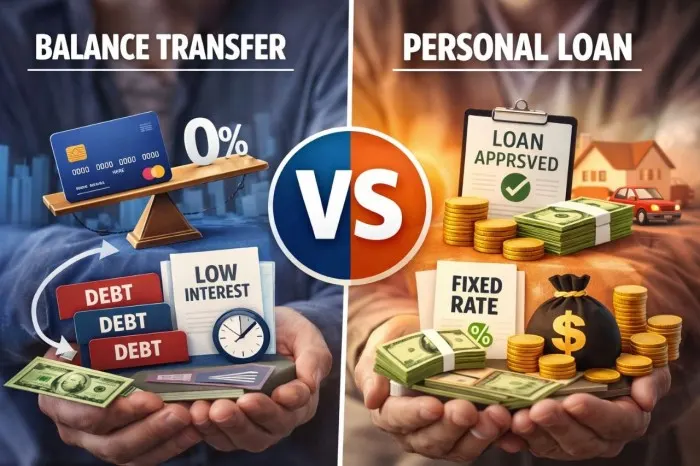
Key Differences Between Balance Transfers and Personal Loans
While both options help manage debt, they differ in several ways.
A balance transfer is best suited for people who already have credit card debt and can pay it off quickly within the promotional interest period. It works well for smaller balances and for borrowers with strong credit who qualify for low introductory rates.
A personal loan, on the other hand, is ideal for people who want a structured repayment plan and need to consolidate larger amounts of debt. It provides predictable payments and a fixed timeline for becoming debt-free.
Another important difference is discipline. With a balance transfer, there is always the risk of continuing to use the old credit cards and accumulating more debt. Personal loans eliminate this temptation because the debt is converted into a fixed installment loan.
Which Option Should You Choose?
The best option depends largely on your financial habits and debt situation.
If you can pay off your debt within the promotional period and want to minimize interest costs, a balance transfer may be the better option.
However, if you prefer a fixed repayment schedule, larger borrowing limit, and long-term stability, a personal loan may be the smarter choice.
Before making a decision, it is important to compare interest rates, fees, repayment terms, and your ability to repay the debt. Choosing the right strategy can make a significant difference in how quickly and efficiently you eliminate your debt.
Final Thoughts
Both balance transfers and personal loans can be effective tools for managing and reducing debt. The key is understanding how each option works and selecting the one that aligns with your financial goals. By carefully evaluating your debt, repayment capacity, and interest costs, you can choose the strategy that helps you move toward financial freedom with confidence.