
From Linen to Velvet: Understanding Different Throw Pillow Materials and Textures

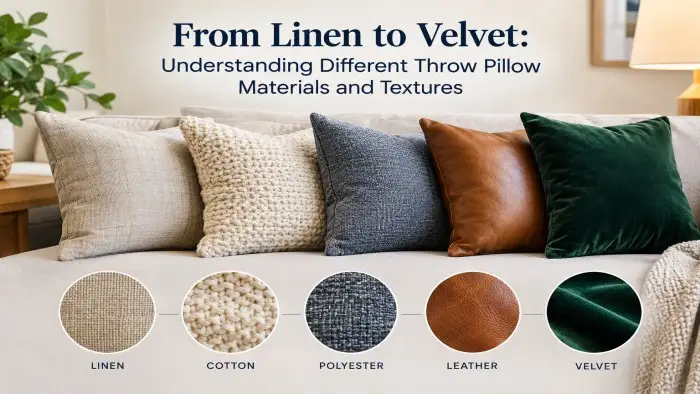
Throw pillows are one of the simplest ways to introduce color, comfort, and personality into a room. While patterns and colors often receive the most attention, the material and texture of a pillow can have an equally important effect on the overall look and feel of a space.
From lightweight linen to plush velvet, different fabrics offer distinct appearances, textures, and practical qualities. Understanding these differences can make it easier to choose throw pillows that complement existing furniture and décor.
Linen Throw Pillows
Linen is known for its natural appearance and relaxed texture. Its slightly irregular surface can give a room a casual, understated character, making it particularly suitable for bedrooms, living rooms, and spaces with a minimalist or coastal-inspired aesthetic.
Linen pillow covers are often available in neutral shades as well as softer colors and patterns. The fabric’s breathable character can also make it a comfortable choice for homes where a lighter, less formal appearance is preferred.
Because linen can wrinkle naturally, its slightly rumpled appearance is often considered part of its charm.
Cotton Throw Pillows
Cotton is a versatile material that works well across many interior styles. It can feel soft and comfortable while accommodating a wide range of colors, prints, embroidery, and patterns.
Cotton throw pillows can work particularly well in busy households because many covers are relatively easy to care for. However, care instructions vary by product, so checking the manufacturer’s recommendations before washing is important.
For a balanced arrangement, cotton pillows can be combined with textured or patterned cushions to add visual variety.
Velvet Throw Pillows
Velvet brings a richer and more luxurious texture to interior spaces. Its soft surface can reflect light differently depending on the direction of the fabric, creating subtle variations in appearance.
Velvet pillows can work especially well in rooms featuring sophisticated, dramatic, or traditional décor. Deep jewel tones, muted neutrals, and rich earthy colors can all complement the fabric’s distinctive surface.
Because velvet has a strong visual presence, even a small number of velvet cushions can add texture without overwhelming the rest of the room.
Wool and Knitted Textures
Wool and knitted pillow covers can introduce warmth and tactile interest. Their textured surfaces are particularly suitable for cozy interiors and can work well during colder seasons.
Chunky knits create a relaxed appearance, while finer woven textures can provide a more refined look. These pillows can be paired with smoother fabrics to create contrast.
When using several textured cushions together, varying the scale of the textures can prevent the arrangement from appearing visually repetitive.
Embroidered and Textured Pillows
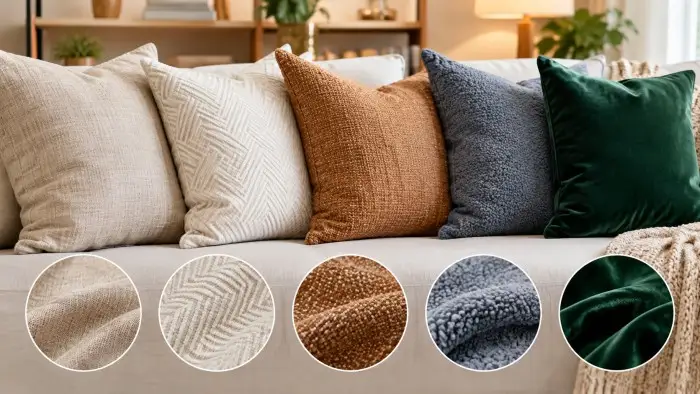
Not all texture comes from the base fabric. Embroidery, tufting, tassels, fringe, raised patterns, and woven details can create additional dimension.
Decorative pillows from Etsy demonstrate how independent makers and designers use embroidery, woven patterns, decorative stitching, and varied fabrics to create distinctive home accents.
Textured pillows can serve as statement pieces, particularly when placed against a simple sofa or chair. They can also be mixed with plain cushions to keep the overall arrangement balanced.
How to Mix Different Materials
Combining materials is an effective way to create depth in a room. Instead of selecting several pillows made from the same fabric, consider pairing contrasting textures.
For example, a linen pillow can provide a relaxed foundation, while a velvet cushion introduces softness and visual richness. A knitted pillow can add another layer of texture without relying on a bold pattern.
The key is to maintain some connection between the pieces through color, pattern, shape, or overall design style.
Choosing Materials for Different Rooms
The ideal pillow material can depend on how a room is used.
- Living rooms: A combination of cotton, linen, velvet, and textured cushions can create a comfortable layered look.
- Bedrooms: Soft cotton, linen, and knitted fabrics can contribute to a relaxed atmosphere.
- Reading areas: Plush or textured materials can add extra visual and tactile comfort.
- Formal spaces: Velvet, embroidered, or richly patterned pillows can complement more sophisticated furnishings.
- Seasonal décor: Wool, knitted, and heavier textures can work well for cooler months, while linen and lightweight cotton can create a fresher appearance.
Consider Color Alongside Texture
Texture should not be considered separately from color. A neutral velvet pillow can make a statement through its surface alone, while a brightly patterned cotton cushion may provide more visual impact through its design.
Using different textures within a similar color palette can create a cohesive arrangement. Alternatively, a neutral sofa can serve as a backdrop for cushions with contrasting colors and materials.
Final Thoughts
Throw pillows can transform the atmosphere of a room without requiring major changes to furniture or décor. Choosing different materials allows homeowners to experiment with softness, texture, color, and visual depth.
Linen offers a relaxed natural appearance, cotton provides versatility, velvet introduces a luxurious feel, and knitted or embroidered designs add tactile interest. By combining materials thoughtfully, throw pillows can become both practical comfort accessories and distinctive decorative elements.