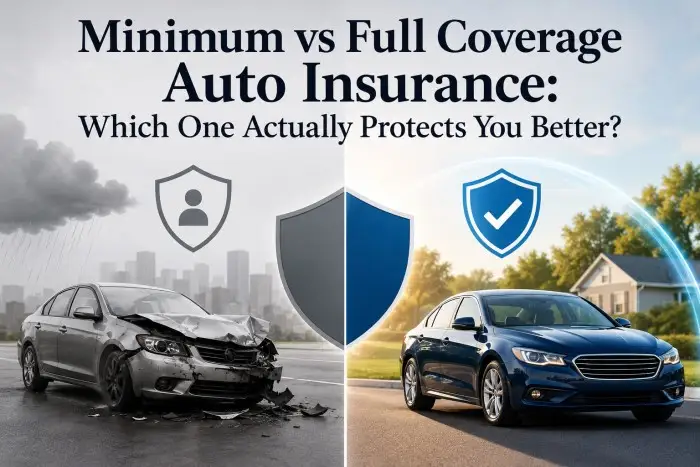
Minimum vs Full Coverage Auto Insurance: Which One Actually Protects You Better?

Choosing the right auto insurance policy can feel confusing, especially when comparing minimum coverage and full coverage plans. Many drivers focus only on monthly premiums, but the real question is how much protection each option provides when accidents, theft, or damage occur.
Understanding the difference between these two insurance types can help drivers avoid unexpected financial losses and choose coverage that matches their lifestyle, vehicle value, and risk level.
What Is Minimum Coverage Auto Insurance?
Minimum coverage insurance refers to the lowest amount of auto insurance legally required to drive in most states. These requirements usually include liability coverage, which pays for damage or injuries you cause to other people in an accident.
Minimum coverage generally includes:
- Bodily injury liability
- Property damage liability
Some states may also require:
- Personal injury protection (PIP)
- Uninsured motorist coverage
However, minimum coverage does not usually pay for:
- Damage to your own car
- Theft
- Weather damage
- Vandalism
- Collision repairs for your vehicle
Because it offers limited protection, minimum coverage is typically cheaper than full coverage insurance.
What Is Full Coverage Auto Insurance?
Full coverage insurance combines liability insurance with additional protection for your own vehicle.
A full coverage policy usually includes:
- Liability coverage
- Collision coverage
- Comprehensive coverage
Collision Coverage: Pays for repairs to your car after an accident, regardless of fault.
Comprehensive Coverage: Protects against non-collision damage such as:
- Theft
- Fire
- Floods
- Hailstorms
- Falling objects
- Animal collisions
- Vandalism
Many lenders require full coverage if the vehicle is financed or leased.
The Biggest Difference: Who Gets Protected?
The key difference between minimum and full coverage insurance is whose vehicle gets protected.
| Situation | Minimum Coverage | Full Coverage |
|---|---|---|
| Damage to another driver’s car | Yes | Yes |
| Injuries to others | Yes | Yes |
| Damage to your own car | No | Yes |
| Theft protection | No | Yes |
| Storm or flood damage | No | Yes |
| Vandalism | No | Yes |
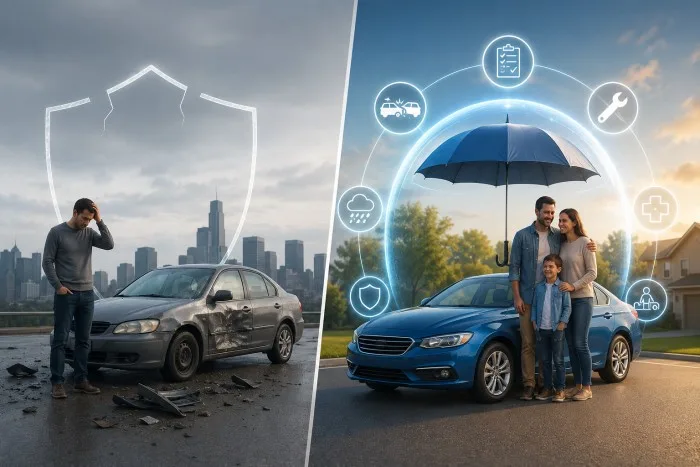
Minimum coverage mainly protects other people from your mistakes. Full coverage also protects your own vehicle and finances.
Why Minimum Coverage Appeals to Many Drivers
Minimum coverage remains popular because it costs less upfront. Drivers with older vehicles sometimes choose minimum coverage if the car’s market value is low.
It may make sense for:
- Older cars with low resale value
- Drivers on very tight budgets
- Vehicles that are rarely used
- Owners who could afford replacement costs themselves
However, lower monthly premiums can become expensive later if a serious accident happens.
The Risks of Minimum Coverage
Many drivers underestimate how costly accidents can become.
Imagine:
- Your car is totaled in a crash
- A tree falls on your vehicle
- Your car is stolen
- A hailstorm damages the roof and windows
With minimum coverage, you may have to pay all repair or replacement costs yourself. Modern vehicles are also much more expensive to repair because of:
- Sensors
- Cameras
- Advanced safety systems
- Computerized components
Even minor accidents can lead to thousands of dollars in repair bills.
Why Full Coverage Offers Better Financial Protection
Full coverage is designed to reduce financial risk after unexpected events.
It provides peace of mind because:
- Repairs are partially or fully covered
- Theft losses may be reimbursed
- Natural disaster damage is included
- You avoid massive out-of-pocket expenses
For drivers with newer vehicles, full coverage is often the smarter long-term decision.
When Full Coverage Makes the Most Sense
Full coverage is usually recommended if:
- Your vehicle is new or expensive
- You drive frequently
- You live in areas with severe weather
- Car theft rates are high nearby
- You rely on your vehicle daily
- You cannot easily afford major repair bills
Families and commuters often prefer full coverage because losing access to a vehicle can disrupt work, school, and daily responsibilities.
Understanding Deductibles
Full coverage policies usually involve deductibles. A deductible is the amount you pay before insurance covers the rest.
For example:
- $500 deductible
- $3,000 repair bill
- Insurance pays $2,500
Higher deductibles generally reduce monthly premiums, while lower deductibles increase them. Choosing the right balance depends on your emergency savings and monthly budget.
Is Full Coverage Always Worth It?
Not always. If your car is very old and worth only a few thousand dollars, paying high premiums for full coverage may not make financial sense.
Some drivers use this simple guideline:
- If annual insurance costs plus deductibles approach the vehicle’s value, minimum coverage may be more practical.
Still, drivers should carefully consider how much financial risk they can realistically handle after an accident.
Comparing Costs Beyond Monthly Premiums
Many people compare insurance plans only by monthly price. But real value comes from long-term protection. A cheaper minimum coverage policy may save money each month, but one major accident could create repair costs far larger than years of premium savings.
Companies like The Motley Fool frequently highlight the importance of balancing affordability with proper financial protection when choosing insurance policies.
Final Thoughts
Minimum coverage insurance satisfies legal driving requirements and may work for older vehicles or budget-conscious drivers. However, it leaves major gaps in protection that could lead to significant financial stress after accidents, theft, or natural disasters.
Full coverage insurance offers broader protection for both your vehicle and your finances. While it costs more upfront, it can save thousands of dollars when unexpected problems occur.
The better option ultimately depends on your vehicle’s value, financial situation, driving habits, and personal risk tolerance.