Key Trends in AI in Gaming for 2025

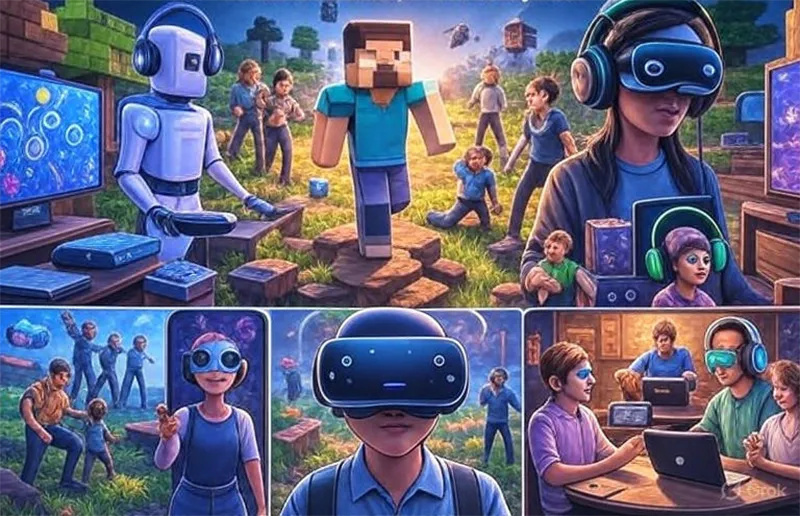
As of August 2025, the gaming industry is valued at approximately £372.16 billion, with projections suggesting growth to £541.63 billion by 2029, driven significantly by AI integration. AI is no longer just a tool for game development; it is transforming gameplay, accessibility, and player experiences. This note synthesizes information from various sources, including industry reports, web articles, and social media discussions, to identify key trends and suggest blog topics.
Key Points
- Research suggests AI is transforming gaming with smarter NPCs, personalized experiences, and streamlined development, but some aspects like ethics remain debated.
- It seems likely that cloud gaming, generative AI, and esports analytics are key trends, though their impact varies by game and player preferences.
- The evidence leans toward AI enhancing accessibility and immersion, but privacy and bias concerns are still being addressed.
Introduction
Hey there, gamers and creators! The gaming world in 2025 is buzzing with excitement, thanks to artificial intelligence (AI). From making characters in your favorite games act like real people to creating worlds that change as you play, AI is shaking things up. This blog dives into the hottest AI trends shaping the gaming industry this year, making games more immersive, accessible, and fun. Whether you’re a player or a developer, these trends are worth knowing about!
Smarter Characters and Worlds
AI is making non-player characters (NPCs) smarter than ever. Imagine characters in games like AI Dungeon Chronicles that remember your choices and talk back like real friends. AI also creates game worlds on the fly, like in Minecraft: Infinite Horizons, where every adventure feels fresh. This makes games more exciting and replayable.
Personalized Gameplay
Ever wish a game could adjust to your skill level? AI is doing just that in 2025. Games like FIFA 2025 tweak difficulty based on how you play, keeping things challenging but fair. It’s like having a game that knows you personally, making every session more engaging.
Easier Game Creation
AI is helping developers make games faster and cheaper. Tools like modl.ai let small teams create stunning visuals and test games automatically. This means more awesome games from indie studios, not just the big names.
Cloud Gaming Boost
No need for a fancy console anymore! AI-powered cloud gaming, like Xbox Cloud Gaming, lets you play high-end games on your phone or laptop with smooth performance. AI ensures the game runs perfectly, no matter your device.
Fair and Fun Multiplayer
AI is keeping multiplayer games fair by catching cheaters and balancing matches. It’s also coaching players in esports, helping them level up their skills with tools like SenpAI. Plus, AI is making games more inclusive with real-time language translation, so players worldwide can connect.
Detailed Analysis of AI in Gaming Trends for 2025
Background and Context
As of August 2025, the gaming industry is valued at approximately £372.16 billion, with projections suggesting growth to £541.63 billion by 2029, driven significantly by AI integration. AI is no longer just a tool for game development; it is transforming gameplay, accessibility, and player experiences. This note synthesizes information from various sources, including industry reports, web articles, and social media discussions, to identify key trends and provide a comprehensive overview of AI’s impact on gaming in 2025.
Key Trends in AI in Gaming for 2025
1. Procedural Content Generation and Generative AI
- Description: AI-driven procedural content generation creates dynamic game levels, quests, and assets, offering infinite variability and replayability. Generative AI enhances this by tailoring content to player interactions, ensuring unique experiences.
- Examples: Games like No Man’s Sky and Minecraft: Infinite Horizons leverage procedural generation, while Civilization Beyond Earth: Genesis uses AI to create personalized narratives and missions.
- Impact: This reduces development costs and time, allowing developers to focus on creative aspects while providing players with fresh content each playthrough. Reports suggest 67% of developers believe AI will automate content generation for richer experiences (ResearchGate).
- Market Insight: Generative AI in gaming is projected to grow at a 23.4% CAGR, reaching $4.18 billion by 2029 (The Business Research Company).
2. Intelligent and Adaptive NPCs
- Description: AI is making non-player characters (NPCs) more lifelike, capable of analyzing player behavior, adapting responses, and engaging in realistic conversations using advanced models like OpenAI’s GPT and DeepMind’s AI.
- Examples: AI Dungeon Chronicles features NPCs that remember player decisions, while Middle-Earth: Reclamation uses AI for complex decision trees and emotional interactions.
- Impact: This enhances immersion by creating dynamic, unpredictable interactions, making game worlds feel alive. It contributes to the industry’s projected $321 billion valuation by 2026 (World Economic Forum).
- Technical Insight: Reinforcement learning and machine learning enable NPCs to adapt to player tactics, influencing dialogue and story arcs.
3. Real-Time Game Balancing and Personalization
- Description: AI adjusts game difficulty, objectives, and challenges in real-time based on player performance, ensuring a tailored experience. It also enhances multiplayer matchmaking for fairness.
- Examples: FIFA 2025 uses AI to adapt defender tactics, while The Sims 5 personalizes storylines based on player choices. AI-driven personalization boosts engagement by 40% (Oye Labs).
- Impact: This increases player retention by 20%, boosting revenue and lifetime value (Transcend Fund).
- Data Point: AI-driven analytics refine updates and suggest in-game items, enhancing monetization.
4. AI-Assisted Game Development
- Description: AI tools streamline development by generating code, art assets, and automating testing. Generative AI is expected to handle 50% of asset development, increasing productivity by 40%.
- Examples: Tools like modl.ai and Inworld, used by studios like Ubisoft, reduce debugging time by 40%. Unity’s AI-driven assistants cut development cycles by up to 30% (Oye Labs).
- Impact: This empowers indie and mid-tier developers to create AAA-quality games on limited budgets, democratizing the industry (Forbes).
- Market Insight: AI in game development is part of a market projected to grow by $27.47 billion from 2025-2029 at a 42.3% CAGR (Technavio).
5. Cloud Gaming and AI Integration
- Description: AI enhances cloud gaming platforms by improving streaming quality, reducing latency, and enabling real-time content updates. Deep Neural Networks (DNN) ensure seamless experiences across devices.
- Examples: Xbox Cloud Gaming and Google Stadia use AI for predictive buffering, allowing high-end gaming on low-end devices (Enablis).
- Impact: This expands market reach by making gaming accessible without expensive hardware, supporting the industry’s growth trajectory.
- Technical Insight: AI-driven cloud servers enable gameplay resumption anytime, enhancing user convenience.
6. Blockchain, NFTs, and AI
- Description: AI integrates with blockchain to create secure, transparent in-game economies, predicting player preferences for personalized asset recommendations. Blockchain ensures transaction integrity.
- Examples: Games using NFTs for unique items leverage AI to balance economies and prevent fraud, with the market expected to reach $50 billion by 2030 (Fortune Business Insights).
- Impact: This creates new monetization opportunities and enhances the value of in-game assets, particularly in play-to-earn models.
- Controversy: The use of NFTs in gaming remains debated due to environmental and ethical concerns.
7. AR, VR, and Metaverse with AI
- Description: AI enhances augmented reality (AR) and virtual reality (VR) gaming by improving motion tracking, physics, and creating immersive virtual worlds. It also supports collaborative metaverse experiences.
- Examples: First Cry: ReGenesis uses AI for realistic NPC animations in VR, while AR games adapt to real-world environments (Fortune Business Insights).
- Impact: This blurs digital and physical worlds, with the VR gaming market projected to surpass $90 billion by 2028.
- Market Insight: AI-driven metaverse gaming fosters social interaction and persistent universes.
8. Immersive Audio and Storytelling
- Description: AI creates dynamic soundscapes and branching narratives that respond to player decisions. Real-time language translation and voice synthesis enhance accessibility.
- Examples: Halo: Origins alters soundtracks based on player actions, while Google’s DeepMind models provide instant translations (Markets and Markets).
- Impact: This deepens immersion and makes games globally accessible, with the voice synthesis market expected to exceed $3.5 billion by 2030.
- Technical Insight: AI interprets voice commands for interactive storytelling.
9. Collaborative Worlds and Modding
- Description: AI supports persistent, evolving game worlds and aids modding communities by generating new content, fostering community-driven experiences.
- Examples: Stellaris: Evolved Empires features AI-simulated ecosystems that evolve offline, while modding tools use AI to suggest content (Smartli).
- Impact: This extends game lifespans and encourages player creativity.
10. AI in Competitive Esports and Game Coaching
- Description: AI provides real-time analytics, strategy optimization, and coaching for competitive gaming, enhancing player performance.
- Examples: Tools like SenpAI and Mobalytics refine skills, while OpenAI’s “Five” defeated humans in Dota 2 (Oye Labs).
- Impact: This supports the $1.5 billion esports AI market by 2025, improving fairness and skill development (Grand View Research).
- Data Point: AI-driven coaching tools are increasingly adopted in professional gaming.
11. Emotionally Responsive AI in Games
- Description: AI detects player emotions via voice and facial expressions, adjusting gameplay to create empathetic experiences.
- Examples: Games tailor difficulty or narratives based on detected emotions, tapping into the emotion AI market growing by 25% annually through 2030 (Statista).
- Impact: This enhances player engagement by making games more personalized.
- Controversy: Privacy concerns arise from emotion detection, requiring careful data handling.
12. AI-Powered Anti-Cheat Systems
- Description: AI detects cheating by analyzing player behavior, ensuring fair play in multiplayer games.
- Examples: AI systems reduced in-game fraud by 70% in 2024, enhancing competitive integrity (Cybersecurity Ventures).
- Impact: This fosters trust and fairness in multiplayer communities.
Supporting Data and Examples
The following table summarizes key trends and associated games, providing concrete examples for 2025:
| Trend | Description | Example Games (2025) |
|---|---|---|
| Procedural Content Generation | Creates dynamic levels, quests, and assets | Minecraft: Infinite Horizons, No Man’s Sky |
| Intelligent NPCs | Adaptive, realistic characters | AI Dungeon Chronicles, Middle-Earth: Reclamation |
| Real-Time Balancing | Adjusts difficulty and personalizes gameplay | FIFA 2025, The Sims 5 |
| AI-Assisted Development | Automates code, art, and testing | Tools like modl.ai, Inworld |
| Cloud Gaming | Enhances streaming and accessibility | Forza Motorsport: Apex AI, Halo: Origins |
| Blockchain and NFTs | Secure in-game economies | NFT-based games |
| AR/VR and Metaverse | Immersive virtual worlds | First Cry: ReGenesis, Oculus Quest games |
| Immersive Audio/Storytelling | Dynamic soundscapes and narratives | Halo: Origins, Civilization Beyond Earth: Genesis |
| Collaborative Worlds | Evolving ecosystems and modding | Stellaris: Evolved Empires |
| Esports and Coaching | Analytics and strategy optimization | Rainbow Six Siege: Next-Gen, Dota 2 |
| Emotionally Responsive AI | Adjusts gameplay based on emotions | Emerging titles |
| Anti-Cheat Systems | Ensures fair play | Multiplayer games |
Inference from the AI Trends in AI enabled gaming in 2025 and beyond.
The integration of AI into gaming in 2025 is redefining the industry, offering unprecedented levels of immersion, accessibility, and efficiency. These trends cater to diverse audiences, from players seeking personalized experiences to developers leveraging AI tools for innovation. For bloggers, these topics provide rich content opportunities, supported by examples like AI Dungeon Chronicles and market data from sources like Technavio. Developers should assess AI readiness, invest in training, and adopt tools like modl.ai, while players can expect more engaging and inclusive gaming experiences. As AI continues to evolve, its synergy with gaming will drive innovations that blur the lines between virtual and real worlds, solidifying gaming’s role as a technological pioneer.