Fresh, Organic, or Frozen Broccoli and Cauliflower: Which Is the Best Choice?

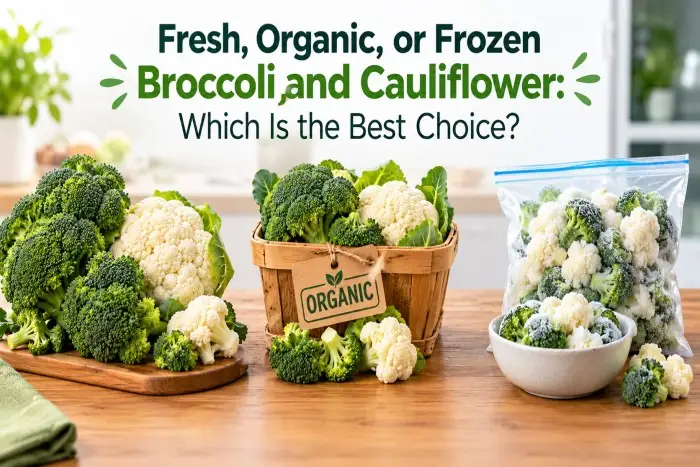
Broccoli and cauliflower are versatile vegetables that fit into everything from quick weekday dinners to comforting soups and roasted side dishes. Available in fresh, organic, and frozen forms, they offer different advantages depending on cooking habits, budget, storage space, and personal preferences. Understanding these differences can help households choose the most suitable option for everyday meals.
Fresh Broccoli and Cauliflower: Best for Texture and Variety
Fresh broccoli and cauliflower are popular choices for people who enjoy preparing vegetables from scratch. Their firm texture makes them ideal for roasting, steaming, stir-frying, and serving raw with dips.
Fresh vegetables can provide a satisfying crunch when cooked correctly. Broccoli florets work well in salads and pasta dishes, while cauliflower can be transformed into roasted steaks, rice alternatives, or creamy soups.
However, fresh produce has a limited shelf life. Broccoli can lose its crispness and develop yellowing florets, while cauliflower may develop brown spots as it ages. Refrigerating both vegetables in suitable packaging and using them promptly can help maintain their quality.
Fresh options are particularly useful when a recipe depends on appearance, firmness, or a specific texture.
Organic Broccoli and Cauliflower: What Makes Them Different?
Organic broccoli and cauliflower are grown according to certified organic farming standards, which restrict the use of certain synthetic pesticides and fertilizers. The exact requirements depend on the certification system used in the country where the vegetables are produced.
Some shoppers prefer organic produce because of its farming practices and environmental considerations. However, organic does not automatically mean more nutritious. Nutrient levels can vary with growing conditions, soil quality, variety, maturity, and storage.
Organic vegetables may also cost more than conventionally grown alternatives. Availability can vary by season and retailer, making price comparisons useful when planning a grocery budget.
Whether organic produce is the right choice depends on individual priorities. Both organic and conventionally grown broccoli and cauliflower can contribute valuable vitamins, minerals, and dietary fibre to a balanced diet. Washing fresh vegetables thoroughly under running water before preparation remains a sensible practice.
Frozen Broccoli and Cauliflower: Convenient and Practical
Frozen broccoli and cauliflower are excellent options for busy households. Vegetables intended for freezing are generally processed soon after harvesting, often through blanching, before being frozen to preserve quality.
Freezing helps extend storage life and reduces the pressure to use vegetables immediately. Because the florets are usually washed and cut before packaging, preparation time is often shorter than with fresh produce.
Frozen vegetables can retain many of their nutrients, although the precise amounts depend on processing, storage, and cooking methods. They are especially convenient for curries, casseroles, pasta sauces, soups, and blended vegetable dishes.
One difference is texture. Frozen broccoli and cauliflower can become softer after cooking because freezing affects the structure of their cells. They may not deliver the same crispness as fresh vegetables, particularly when thawed before cooking.
For better results, add frozen florets directly to suitable hot dishes or roast them from frozen when the packaging instructions allow it. Avoid overcooking, as excessive heat can make them mushy.
Comparing Fresh, Organic, and Frozen Options
Each type has strengths, and no single option is best for every situation.
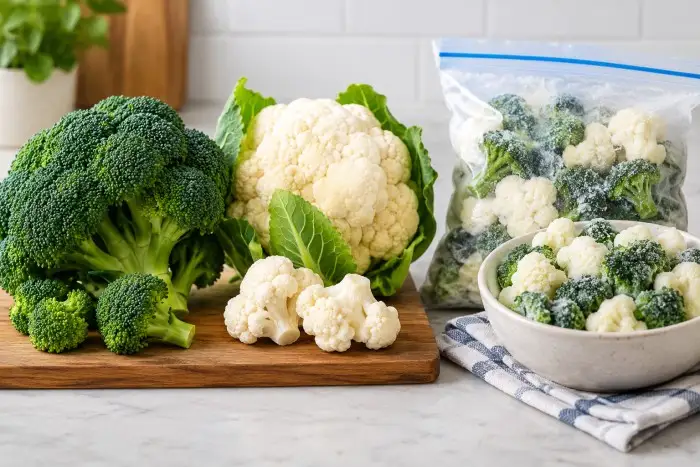
- Fresh vegetables: Ideal for crunchy salads, attractive side dishes, and recipes requiring firm florets.
- Organic vegetables: Suitable for shoppers who prioritise certified organic farming practices and have room in their budget.
- Frozen vegetables: Best for convenient meal preparation, longer storage, and reducing the risk of unused produce going to waste.
Price is another important factor. Fresh vegetables may be economical when purchased in season, while frozen packs can offer good value because the vegetables are ready to use. Organic options may carry a premium, although prices vary by supplier and location.
When comparing costs, consider the amount that will actually be eaten rather than just the package price. A slightly more expensive frozen bag may be more economical than fresh produce that spoils before it can be used.
Which Option Offers the Best Nutrition?
Fresh, organic, and frozen broccoli and cauliflower can all support a nutritious diet. Broccoli provides vitamin C, vitamin K, folate, and fibre, while cauliflower supplies vitamin C, folate, and other beneficial nutrients.
Organic status alone does not guarantee a higher nutrient content, and frozen vegetables should not automatically be considered less nutritious than fresh ones. Harvest timing, storage duration, and cooking techniques can all affect nutrient retention.
Steaming, microwaving with a small amount of water, or roasting can help preserve the vegetables’ qualities. Long boiling may cause some water-soluble nutrients to move into the cooking water. When preparing soups or stews, that liquid can be included in the meal.
How to Choose the Right Vegetables for Everyday Meals
A practical approach is to keep a combination of fresh and frozen vegetables at home. Fresh broccoli or cauliflower can be used for weekend roasting or salads, while frozen florets provide a reliable backup for quick dinners.
Before shopping, check the planned meals for the week. Choose fresh produce when it will be used soon, consider organic varieties when their farming standards align with personal preferences, and stock frozen vegetables for recipes that benefit from convenience.
Retailers such as Ocado may offer different varieties and formats, making it easier to compare available options, package sizes, and prices before ordering groceries.
Final Thoughts
Fresh, organic, and frozen broccoli and cauliflower each have a place in a well-planned kitchen. Fresh produce offers excellent texture, organic options appeal to shoppers who value certified farming methods, and frozen vegetables provide flexibility with less preparation and a longer storage life.
The best choice ultimately depends on the recipe, budget, available storage, and how quickly the vegetables will be used. Choosing the format that makes it easiest to prepare and enjoy vegetables regularly is a practical way to make everyday meals more varied and nutritious.