Beyond the Seed: Why Suet, Mealworms, and Peanut Butter are Superfoods for Garden Birds

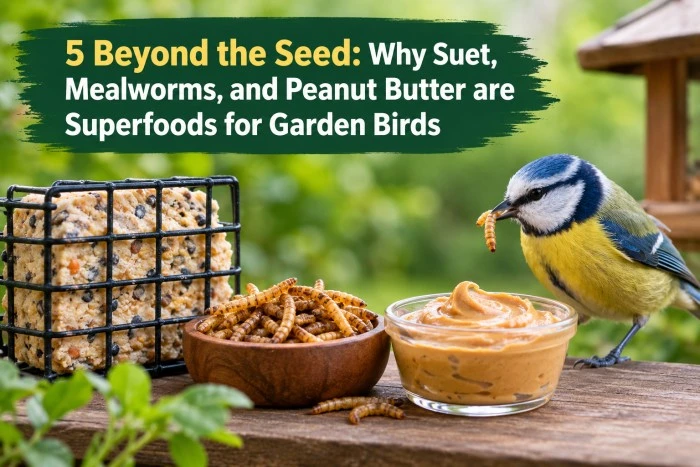
Garden birds bring life, colour and song to outdoor spaces, yet many people still rely solely on basic seed mixes. While seeds form a useful foundation, true year-round vitality comes from energy-dense options that deliver fats, proteins and nutrients seeds alone cannot match. These superfoods for garden birds—suet, mealworms and peanut butter—offer concentrated nutrition that supports breeding, migration recovery and winter survival in ways traditional feeders often miss.
The Limitations of Seed-Only Feeding
Standard seed blends provide carbohydrates and some protein, but they fall short when birds need rapid energy or specialised nutrients. During cold snaps, nest-building or post-migration recovery, birds require high-calorie fats and easily digestible proteins. Seeds can leave gaps in the diet, especially for insectivorous species that struggle to find natural prey in colder months or after pesticide use has reduced insect populations. Expanding beyond seeds closes these nutritional gaps and attracts a wider variety of species to gardens.
Suet: Pure Energy for Cold Days and Active Birds
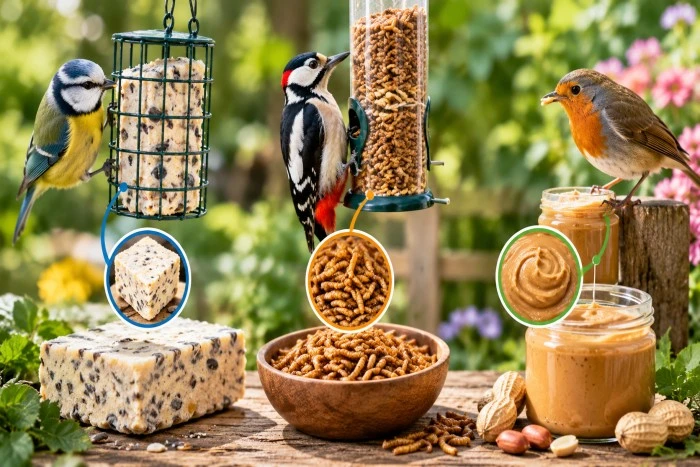
Suet is rendered animal fat, typically beef or mutton, often mixed with seeds, insects or berries. Its high fat content delivers dense calories that birds convert quickly into body heat and flight energy. In winter, when natural food is scarce and temperatures drop, suet helps small birds maintain critical body weight. Blue tits, great tits, nuthatches and woodpeckers are frequent visitors to suet feeders or cakes.
High-quality suet is free from additives and can be offered in cages, logs or homemade recipes. It is especially valuable for birds with high metabolic rates that burn energy rapidly. Because fat is so calorie-rich, even small amounts make a significant difference. Many bird enthusiasts notice increased activity and healthier plumage once suet becomes a regular offering.
Mealworms: Protein Powerhouses for Nesting and Growth
Mealworms, the larvae of the darkling beetle, rank among the best protein sources available to garden birds. Fresh or dried, they supply the amino acids essential for muscle development, feather growth and successful breeding. Parent birds feeding chicks seek high-protein prey; providing mealworms reduces the pressure on natural insect populations and improves fledging success.
Robins, blackbirds, wrens and thrushes eagerly take mealworms from ground trays or specialised feeders. Live mealworms stimulate natural foraging behaviour, while dried versions offer convenience and longer storage. Introducing mealworms during the breeding season can transform a garden into a productive nursery, with more fledglings surviving to independence. Outside breeding time they remain a valuable year-round protein boost, particularly when natural insects are scarce.
Peanut Butter: Convenient, Energy-Rich and Versatile
Smooth, unsalted peanut butter is an under-appreciated garden-bird food. Rich in healthy fats and plant protein, it provides sustained energy and is easy to offer. A thin smear on tree bark, pine cones or specialised feeders attracts woodpeckers, nuthatches, tits and even sparrows. Because it sticks well, birds can feed efficiently without scattering food on the ground where it may spoil or attract unwanted visitors.
When sourcing peanut butter, choose pure varieties without added sugar, salt or xylitol. Ocado stocks several suitable natural options that make it simple for busy households to keep a reliable supply. Combined with seeds or pressed into homemade fat balls, peanut butter becomes a versatile ingredient that extends the value of other foods.
Practical Ways to Offer These Superfoods Safely
Hygiene and presentation matter. Use feeders that protect suet and mealworms from rain and larger animals. Clean feeders regularly to prevent disease. Offer peanut butter in moderation and avoid anything containing artificial sweeteners. Rotate foods so birds receive a balanced intake rather than relying on a single item. Position feeders near cover so birds feel secure while feeding, yet high enough to reduce risk from cats.
Start with small quantities and observe which species visit. Over time you will learn preferences and adjust offerings accordingly. Combining suet, mealworms and peanut butter with a base of quality seed creates a comprehensive feeding station that supports birds through every season.
Broader Benefits for Biodiversity and Observation
Gardens that provide these calorie- and protein-rich foods often host greater species diversity. Insectivores that rarely visit seed-only stations appear more regularly. Healthier birds display brighter plumage, more vigorous song and stronger territorial behaviour. For the observer, the reward is closer encounters and richer wildlife watching. Supporting garden birds in this way also contributes to local ecological resilience, helping populations buffer against habitat loss and climate pressures.
Moving beyond basic seed is not complicated. Suet supplies essential fats, mealworms deliver critical protein, and peanut butter offers convenient energy. Together they form a powerful nutritional trio that keeps garden birds thriving. By incorporating these foods thoughtfully, anyone can turn a simple feeder into a genuine lifeline for wildlife, enriching both the garden and the experience of those who tend it.