From City Commutes to Outdoor Trails: Choosing an E-Bike for Different Terrains

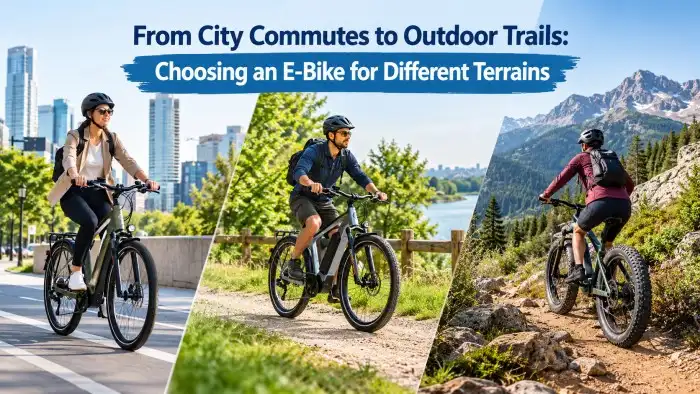
Electric bikes have become a practical option for commuting, recreational riding, and outdoor exploration. However, not every e-bike is designed for the same environment. A model that works well on smooth city streets may not provide the same experience on gravel paths, dirt trails, or uneven roads.
Choosing an e-bike based on terrain can help improve comfort, stability, traction, and overall riding performance.
E-Bikes for City Streets
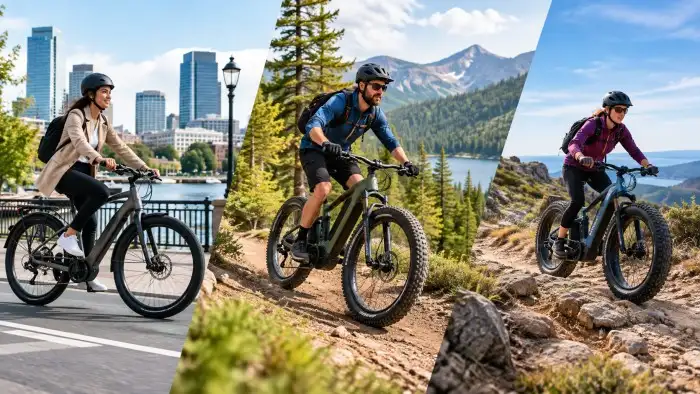
Urban commuting typically involves paved roads, bike lanes, sidewalks, and occasional uneven sections. For this type of riding, an e-bike with a comfortable riding position, dependable brakes, efficient tires, and sufficient battery range can be practical.
Commuter-oriented models often prioritize maneuverability and convenience. Features such as integrated lights, racks, fenders, and a relatively lightweight frame can also be useful for everyday transportation.
If most journeys involve short-to-medium distances across paved roads, there may be little need for aggressive off-road tires or extensive suspension.
E-Bikes for Rough Pavement and Uneven Roads
City routes are not always perfectly smooth. Potholes, cracked pavement, gravel shoulders, and poorly maintained roads can create additional challenges.
For mixed urban terrain, wider tires can provide additional stability and traction. Front suspension may also help absorb some of the impact from bumps and uneven surfaces.
Tire pressure is another consideration. Correct inflation can affect comfort, grip, rolling resistance, and handling. Riders should follow the manufacturer’s recommended range rather than adjusting pressure without guidance.
E-Bikes for Gravel Roads
Gravel riding requires more traction than smooth pavement. Loose stones can cause the tires to shift beneath the bike, particularly when cornering or braking.
Wider tires with suitable tread can provide better contact with loose surfaces. A stable frame and responsive braking system can also make gravel riding more manageable.
Riders planning frequent gravel trips should consider battery capacity as well. Longer rides away from charging points may require a larger battery or careful management of the available assistance levels.
E-Bikes for Dirt and Outdoor Trails
Dirt trails can include roots, rocks, loose soil, mud, and sudden changes in elevation. An e-bike intended for this environment generally needs features that support traction, control, and shock absorption.
Fat tires can be useful on certain loose surfaces because their wider profile can increase stability. Suspension can also reduce the impact of bumps and obstacles, helping make longer rides more comfortable.
Motor performance matters when trails include steep sections. However, motor power should be considered alongside battery capacity, gearing, rider weight, and terrain.
Folding E-Bikes for Flexible Travel
Folding e-bikes offer a different type of versatility. Their compact design can make them convenient for storage, transportation, and combining cycling with other forms of travel.
Some folding models are primarily intended for urban environments, while others feature wider tires and components suitable for a broader range of surfaces. When considering a folding e-bike, it is important to check the manufacturer’s intended use rather than assuming that every folding design is suitable for trails.
Models available from ACTBEST demonstrate how different e-bike configurations can address varying transportation and riding requirements.
Fat-Tire E-Bikes for Mixed Terrain
Fat-tire e-bikes are recognizable by their significantly wider tires. The larger tire footprint can provide stability across surfaces such as sand, gravel, dirt, and packed trails.
They can also be used on pavement, although wider tires may have different rolling characteristics from narrower commuter tires. Riders who regularly switch between city streets and outdoor surfaces may find a versatile fat-tire design useful, depending on the specific model and riding conditions.
Consider Motor and Battery Requirements
Terrain has a direct effect on energy consumption. Hills, loose surfaces, heavy loads, frequent acceleration, and higher assistance levels can reduce battery range.
Before choosing an e-bike, consider the typical distance and elevation of regular routes. A bike with a suitable battery capacity and appropriate motor assistance can reduce the need for frequent charging.
Manufacturers’ stated ranges are generally estimates, and actual performance can vary according to terrain, rider weight, speed, temperature, tire pressure, and riding mode.
Braking and Safety Features
Reliable braking is important across all terrains but becomes particularly significant on gravel, dirt, wet surfaces, and steep routes.
Disc brakes can provide strong stopping performance, while lighting and reflective elements can improve visibility during low-light rides. Riders should also use appropriate protective equipment and adjust speed according to surface conditions.
How to Match an E-Bike to the Terrain
Before purchasing, consider where the bike will be used most often. A simple comparison can help:
- Paved city roads: Prioritize comfort, efficient tires, battery range, and convenient features.
- Uneven urban roads: Consider wider tires and front suspension.
- Gravel: Look for suitable tread, stability, and dependable braking.
- Dirt trails: Consider stronger traction, suspension, and appropriate motor assistance.
- Mixed terrain: Look for a versatile configuration that balances road efficiency with off-road capability.
- Frequent travel or limited storage: A folding design may provide additional convenience.
Final Thoughts
The ideal electric bike depends on the terrain, distance, riding frequency, and type of experience expected. City commuters may prioritize efficiency and convenience, while outdoor riders may place greater emphasis on tire traction, suspension, motor assistance, and battery capacity.
Understanding these differences makes it easier to compare e-bike designs and select a model suited to the roads and trails encountered most frequently.