How to Choose the Right Lightweight Electric Bike for Women: A Complete Buying Guide

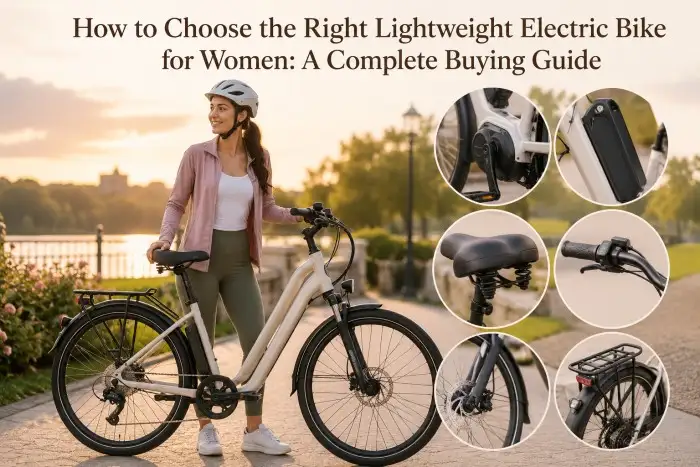
Electric bikes have transformed the way people commute, exercise, and explore the outdoors. For many women, a lightweight electric bike offers the perfect balance of comfort, performance, and convenience. Unlike heavier models that can be difficult to maneuver or store, lightweight e-bikes are easier to handle, transport, and ride, making them an excellent choice for riders of all experience levels.
But how light should an electric bike actually be? Is the lightest option always the best? The answer depends on your riding needs, physical strength, terrain, and daily routine. This guide explains what qualifies as a lightweight electric bike and the key factors to consider before making a purchase.
What Is Considered a Lightweight Electric Bike?
Traditional electric bikes typically weigh between 50 and 70 pounds (23–32 kg) due to their batteries and motors. A lightweight electric bike generally falls between 35 and 50 pounds (16–23 kg).
Some premium models weigh even less, thanks to advanced materials like aluminum alloy and carbon fiber. However, reducing weight often involves balancing battery size, motor power, and overall cost.
Why Weight Matters
The weight of an electric bike affects far more than portability. It influences handling, acceleration, comfort, and ease of everyday use.
Easier to Lift and Carry
Many riders need to lift their bike into a car trunk, carry it upstairs, or place it on a bike rack. A lighter bike requires less effort and is especially beneficial for apartment dwellers or those with limited storage space.
Better Maneuverability
Lightweight bikes respond more quickly when turning, navigating crowded streets, or riding on winding trails. They generally feel more agile and easier to control.
Improved Riding Confidence
New riders often find lighter bikes less intimidating. They are easier to balance when starting, stopping, or riding at lower speeds.
Simpler Storage
Whether you’re storing your bike in a garage, apartment, or office, a lighter model is easier to move around and reposition.
How Light Is Light Enough?
Rather than choosing the lightest bike available, look for a model that matches your intended use.
Around 35–40 Pounds
Ideal for:
- Urban commuting
- Apartment living
- Frequent lifting
- Riders who prioritize portability
These bikes are among the easiest to transport but may have smaller batteries and less powerful motors.
Around 40–45 Pounds
This range offers an excellent balance between portability and performance.
Suitable for:
- Daily commuting
- Weekend rides
- Mixed terrain
- Recreational cycling
Many riders find this weight range to be the most practical.
Around 45–50 Pounds
Slightly heavier bikes often provide:
- Larger batteries
- Longer riding range
- Stronger motors
- Increased stability
They’re a great option for longer rides and hillier routes.
Features to Look For
Step-Through Frame
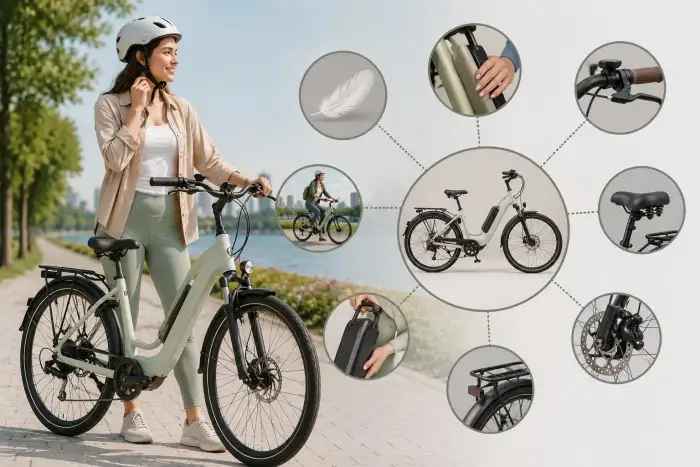
A step-through frame makes mounting and dismounting easier while improving overall comfort. It’s particularly useful for riders wearing skirts, dresses, or work attire.
Adjustable Handlebars and Seat
Proper bike fit improves posture, reduces fatigue, and enhances control during longer rides.
Comfortable Saddle
A supportive saddle significantly improves the riding experience, especially on extended journeys.
Battery Range
Think about how far you typically travel.
Common ranges include:
- 20–30 miles for casual rides
- 30–50 miles for commuting
- 50+ miles for longer adventures
Choose a battery that comfortably exceeds your usual riding distance.
Motor Power
Most lightweight electric bikes use motors ranging from 250W to 500W.
A 250W motor is suitable for flat city streets, while 500W motors provide additional power for hills and carrying cargo.
Disc Brakes
Reliable braking is essential regardless of weather conditions. Hydraulic or mechanical disc brakes offer consistent stopping power and improved safety.
Choosing the Right Frame Material
Frame material plays a significant role in overall weight.
Aluminum Alloy
- Lightweight
- Rust resistant
- Durable
- Affordable
This is the most common material used in lightweight e-bikes.
Carbon Fiber
- Extremely lightweight
- Excellent vibration absorption
- Premium appearance
Carbon fiber bikes are lighter but usually come with a higher price tag.
Should You Sacrifice Battery Size for Less Weight?
Not necessarily.
While smaller batteries reduce weight, they also reduce riding range. If you regularly ride long distances, a slightly heavier bike with a larger battery may provide a better overall experience.
The ideal bike balances portability with practical everyday performance.
Tips Before Buying
Before purchasing a lightweight electric bike, consider these questions:
- Will you carry it upstairs?
- Do you need to transport it by car?
- How far do you ride each week?
- Are your routes mostly flat or hilly?
- Do you value portability more than maximum range?
Answering these questions will help narrow your options.
Maintenance Tips
Keeping your electric bike in good condition extends its lifespan.
- Charge the battery according to the manufacturer’s recommendations.
- Clean the frame after riding in wet or muddy conditions.
- Check tire pressure regularly.
- Inspect brakes before long rides.
- Store the bike in a dry, sheltered location.
- Schedule periodic professional servicing.
Proper maintenance also helps preserve battery performance and ride quality.
Where to Find Lightweight Electric Bikes
When shopping for a lightweight electric bike, compare frame materials, battery capacity, motor power, safety features, and rider comfort rather than focusing on weight alone. Brands such as ACTBEST offer a range of electric bikes designed to combine portability, reliable performance, and everyday practicality for commuters and recreational riders alike.
Conclusion
A lightweight electric bike offers greater convenience, easier handling, and increased confidence for riders of all skill levels. However, the lightest bike isn’t always the best choice. The right model is one that suits your daily routine, riding style, and transportation needs.
By considering factors such as frame design, battery range, motor power, and overall comfort alongside weight, you’ll be better equipped to choose an electric bike that delivers an enjoyable and dependable riding experience for years to come.